
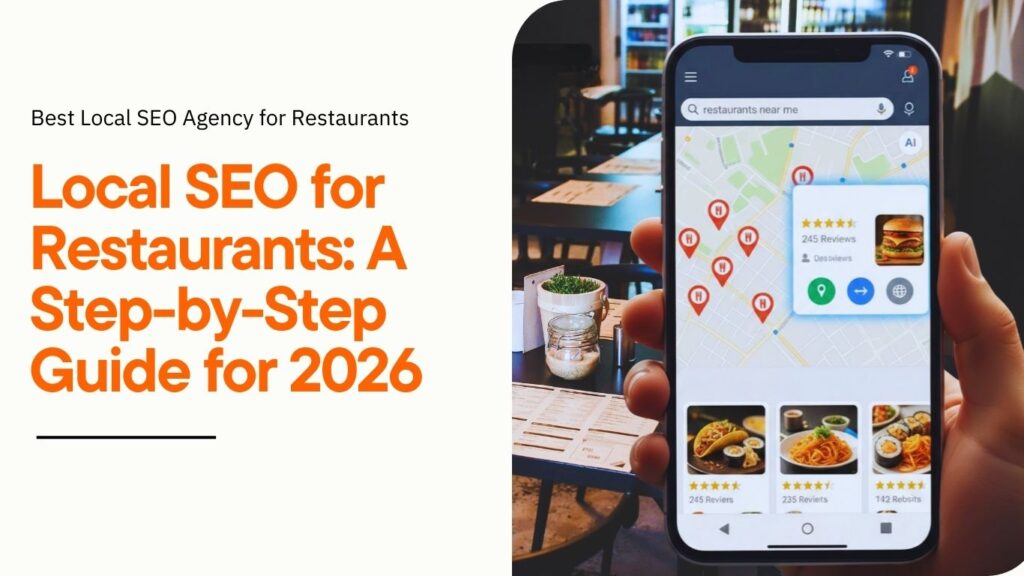
In 2026, diners don’t browse endlessly or rely on word-of-mouth alone. They search with high intent, precise location signals, and immediate expectations:
- “Best Italian restaurant near me”
- “Late-night food open now”
- “Family-friendly restaurant in Downtown”
- “Top-rated café within 2 miles”
Today’s diners decide where to eat in seconds. If your restaurant isn’t present at that decision point, you lose more than rankings—you lose immediate demand. This reality has elevated Local SEO into a critical growth engine for the restaurant industry.
If you want, I can optimize one version further for EEAT, voice search, or AEO snippets to match your 2026 Local SEO blog perfectly.
At Dero Digital, after decades of working with local and multi-location food brands, we’ve seen one clear truth:
Restaurants that master local search dominate foot traffic, delivery orders, and brand loyalty—regardless of competition.
This guide breaks down exactly how Local SEO works for restaurants in 2026, step by step, using modern SEO, GEO targeting, AEO frameworks, and AI-ready optimization.
Why Local SEO for Restaurants Is More Important Than Ever
Google’s local algorithm is now powered by:
- AI-driven personalization
- Real-time location data
- Behavioral intent prediction
- Trust and engagement signals
This means search engines don’t just rank restaurants—they recommend them.
What Google prioritizes in 2026:
- Proximity to the searcher
- Relevance to search intent
- Reviews and reputation
- Engagement with Google Maps
- Consistency across the local web
- Structured data and AI-readable content
Restaurant-focused local SEO puts your brand in front of hungry diners at the precise moment they’re ready to make a decision.
Step 1: Optimize Your Google Business Profile for Restaurants
Your Google Business Profile is your most powerful local asset. In many cases, customers convert without ever visiting your website.
Best practices for restaurant GBP optimization:
- Choose the most accurate primary and secondary categories
- Add menu links, reservation URLs, and delivery partners
- Use keyword-rich but natural descriptions
- Upload high-quality food, interior, and ambience photos
- Enable messaging and booking options
- Publish weekly Google Posts (offers, events, specials)
A fully optimized GBP dramatically increases:
- Calls
- Direction requests
- Table bookings
- Walk-in visits
This forms the cornerstone of effective Local SEO strategies for restaurants.
Step 2: Create Location-Based Restaurant Pages
In 2026, Google understands neighborhoods—not just cities.
For businesses in competitive regions, your website needs to showcase location-focused relevance.
What high-performing restaurant websites include:
- Dedicated location pages (even for single locations)
- Embedded Google Maps
- Area-specific keywords (neighborhoods, landmarks)
- Parking, seating, and accessibility details
- Local schema markup
Focusing on particular geographic locations allows Google to associate your restaurant with nearby areas, enhancing visibility in local searches and map listings.
Learn more about advanced local optimization here: Best Local SEO Services Provider in Delhi NCR
Step 3: Optimize for “Near Me” & Voice Search Queries
Voice search and conversational queries are exploding in food-related searches.
People now ask:
- “Where can I eat nearby right now?”
- “What’s the best restaurant open late near me?”
- “Find a vegan restaurant close to my location”
How Local SEO for Restaurants adapts:
- Conversational content and FAQs
- Natural language keyword placement
- AEO-focused answers
- Mobile-first performance
- Schema for menus, hours, and pricing
This allows your restaurant to appear in:
- Voice assistants
- AI Overviews
- Local Packs
- Featured snippets
Step 4: Reviews & Reputation Management
By 2026, customer reviews have become essential, serving both as key ranking factors and proof of credibility.
Google evaluates:
- Review velocity
- Review sentiment
- Owner responses
- Keyword context within reviews
- Cross-platform consistency
Best practices for restaurant reviews:
- Encourage real customers to leave feedback
- Respond professionally to every review
- Address negative reviews transparently
- Highlight local experiences in responses
- Maintain a steady review flow
Restaurants with strong review signals consistently outrank competitors—even with smaller budgets.
Step 5: Build Local Citations & Food Industry Listings
Local citations act as digital endorsements, highlighting your restaurant’s credibility and visibility to both potential customers and search engines.
A strong Local SEO strategy ensures:
- Consistent NAP (Name, Address, Phone)
- Listings on food-specific platforms
- City and neighborhood directories
- Zero duplicate or incorrect entries
Builds trust across Google’s local ecosystem and reinforces EEAT signals.
Step 6: Content That Attracts Local Diners
Restaurant blogging isn’t just about sharing recipes—it’s about engaging the local community and catering to what diners truly seek.
High-performing content examples:
- “Best brunch spots in [Area]”
- “Where to eat before a concert near [Venue]”
- “Top family restaurants in [Neighborhood]”
- “Late-night food options in [City]”
This content:
- Attracts ready-to-convert users
- Builds topical authority
- Feeds AI and LLM search systems
- Supports internal linking to location pages
Next-Gen Local SEO for Restaurants—expertly designed strategies that attract diners and boost visibility.
Step 7: AI, AEO & LLM Optimization for Future Search
Search in 2026 is no longer text-only.
AI assistants, predictive search, and large language models now influence discovery.
Your restaurant must be optimized for:
- AI summaries
- Conversational answers
- Structured data consumption
- Entity recognition
- Menu and pricing clarity
At Dero Digital, we design restaurant SEO campaigns tailored for AI and LLMs, enhancing your presence on both classic search engines and emerging AI-powered discovery platforms.
Common Mistakes Restaurants Still Make
Even in 2026, many restaurants fail at local SEO due to:
- Inconsistent business information
- Ignoring Google Business optimization
- Fake or spammy reviews
- Poor mobile experience
- No local content strategy
- Outdated SEO tactics
Avoiding these mistakes alone can dramatically improve rankings.
How Dero Digital Helps Restaurants Win Local Search
Dero Digital’s Local SEO for Restaurants approach seamlessly integrates:
- Advanced GEO targeting
- Google Maps optimization
- Review growth systems
- Local content clusters
- AI-driven keyword intelligence
- EEAT-focused authority building
We don’t just help restaurants rank—we help them become the default dining choice in their area.
You may also like to read: Mastering LLM Optimization (LLMO): The Future of AI-Driven Visibility.
Final Thoughts
By 2026, thriving restaurants succeed not by chance or passersby, but through strong local presence, earned trust, and being discovered exactly when diners are ready to choose.
For restaurants, local SEO has evolved from a marketing choice to an essential driver of growth.
When done right, it delivers:
- More reservations
- More walk-ins
- More delivery orders
- More loyal customers
Most importantly, it ensures your restaurant appears right in front of hungry diners at the precise moment they’re looking for a meal.
Frequently Asked Questions (FAQs)
Q1. How long does Local SEO take for restaurants?
Typically 2–4 months for visibility improvements and 4–6 months for strong local dominance, depending on competition.
Q2. Does Local SEO work for small or single-location restaurants?
Yes. In fact, single-location restaurants benefit the most from hyper-local optimization.
Q3. Is Google Maps more important than the website?
Both matter, but Google Maps often drives faster conversions for restaurants.
Q4. Do reviews really affect restaurant rankings?
Absolutely. Reviews influence rankings, trust, and click-through rates.
Q5. Why choose Dero Digital for Local SEO for Restaurants?
Because we combine GEO accuracy, AI optimization, EEAT signals, and proven local frameworks tailored specifically for food businesses.

Digital Marketing Executive at Dero Digital, specializing in SEO, content strategy, and performance marketing. He helps businesses grow online with data-driven strategies, smart optimization, and a strong focus on measurable results.